HydroTransformer helps pharmaceutical companies create better treatments. We see many partners struggle to find reliable sources for specialized indole derivatives like 7-methylindole. This compound offers unique properties that speed up drug discovery.
7-Methylindole serves as an important intermediate in the synthesis of advanced pharmaceuticals, including innovative oral peptides for conditions like psoriasis. It provides a specific structural feature—the 7-methyl substituted indole ring—that appears in cutting-edge molecules such as icotrokinra. Manufacturers use it to build complex structures with high precision and efficiency.
Why Do Pharmaceutical Teams Search for High-Quality 7-Methylindole?
Many drug development projects hit roadblocks when scaling up complex heterocyclic intermediates. Teams need consistent purity and supply to keep timelines on track. Delays here can push back entire clinical programs.
High-purity 7-methylindole enables efficient incorporation of the 7-methyl-1H-indol-3-yl motif into macrocyclic peptides and other active pharmaceutical ingredients. This motif enhances binding affinity and selectivity in target molecules. Suppliers who understand scale-up challenges deliver material that meets strict regulatory standards for both research and commercial production.
At HydroTransformer, we built our 25,000㎡ facility with exactly these needs in mind. Our team of over 100 experts handles every step from molecule design to manufacturing. We started in 2021 with a clear focus on nitrogen-containing heterocyclic aromatics like indole and its derivatives. This focus lets us support partners in pharmaceuticals and semiconductor materials with customized solutions.
I remember one project where a client needed rapid delivery of a 7-methylindole derivative for their lead optimization. Our synthesis and analytical teams worked together to deliver material ahead of schedule. The client later told me that consistent quality helped them advance their candidate faster than planned. Stories like this show why we emphasize expertise in structure design, synthesis, characterization, and scale-up.
How Does 7-Methylindole Contribute to Breakthrough Treatments for Psoriasis?
Psoriasis patients often wait for new options that combine strong efficacy with convenient dosing. Injectable biologics work well but many people prefer oral medicines. New research points to exciting progress here.
Icotrokinra, an oral macrocyclic peptide developed by Johnson & Johnson, incorporates the 7-methylindole moiety and shows impressive results in treating moderate-to-severe plaque psoriasis. Clinical data from the ICONIC-LEAD Phase 3 trial demonstrated that 65% of patients achieved clear or almost clear skin (IGA 0/1) after 16 weeks compared to 8% on placebo. Additionally, 50% reached PASI 90 response versus only 4% in the placebo group.
The molecule works by selectively blocking the IL-23 receptor. IL-23 plays a central role in driving inflammation in psoriasis and related conditions. Icotrokinra binds with high affinity and inhibits IL-23 signaling in T cells. This mechanism delivers efficacy comparable to injectable biologics while offering the convenience of a daily oral tablet.
Early onset of action stands out in the data. Improvements appeared as soon as week 4 for PASI 75 and week 8 for PASI 90. Responses continued to improve through week 24. The trial also included adolescents, where even higher response rates occurred—84% IGA 0/1 and 70% PASI 90 at week 16.
China's Center for Drug Evaluation recently granted priority review to icotrokinra. This decision recognizes its potential benefit for patients, including children as young as 12. Faster review could bring this treatment option to more patients sooner.
What Structural Features Make 7-Methylindole Valuable in Peptide Design?
The indole ring system appears in many natural products and drugs. The methyl group at position 7 changes the electronic and steric properties in useful ways. Chemists use this to fine-tune molecular behavior.
7-Methylindole provides a rigid, aromatic scaffold. The nitrogen atom can participate in hydrogen bonding. The 7-methyl substitution influences conformation and metabolic stability. These traits help medicinal chemists optimize drug candidates. In icotrokinra, the 7-methyl-1H-indol-3-ylmethyl group sits at a key position in the macrocyclic structure. It contributes to the overall shape and binding interactions with the IL-23 receptor. The disulfide cyclization and other non-natural amino acids work together with this indole unit to create a stable, orally bioavailable peptide.
Our experience at HydroTransformer shows that small changes in substitution patterns can dramatically affect downstream performance. We apply this knowledge when customers request custom derivatives. We support them from initial gram-scale samples through kilogram production.
How Do Synthesis and Scale-Up Challenges Affect 7-Methylindole Supply?
Producing 7-methylindole at high purity requires careful control of reaction conditions. Traditional routes start from substituted anilines and involve cyclization steps. Modern methods use catalytic approaches to improve yields and reduce waste.
Key properties include:
Molecular formula: C9H9N
Molecular weight: 131.17 g/mol
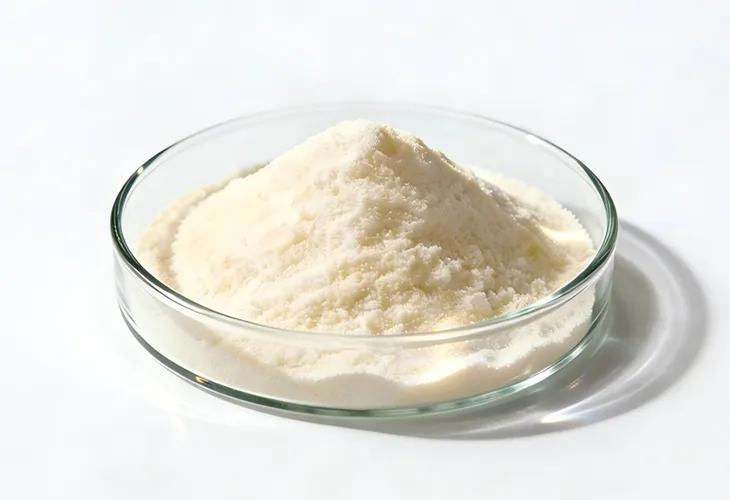
Appearance: off-white crystalline solid
Melting point: around 80-84°C
These characteristics influence handling and purification strategies. Impurities can carry through to final drug substances, so analytical characterization becomes critical. We maintain dedicated equipment for heterocyclic synthesis. Our teams monitor reactions with advanced analytical tools. This setup ensures batch-to-batch consistency that pharmaceutical manufacturers demand.
| Aspect | Importance for Pharmaceutical Use | HydroTransformer Advantage |
| Purity | Must meet ICH guidelines for intermediates | Multiple purification techniques and QC testing |
| Supply Reliability | Avoid delays in clinical and commercial timelines | Large production capacity in 25,000㎡ facility |
| Customization | Tailored derivatives for specific scaffolds | Expertise in structure design and modification |
| Regulatory Support | Documentation for IND and NDA filings | Full analytical data packages and scale-up records |
| Cost Efficiency | Balance quality with development budgets | Optimized processes from lab to manufacturing |
We also serve semiconductor materials companies. The same heterocyclic expertise applies to photoelectric and speciality chemical applications. This broad experience helps us anticipate needs across industries.
Many clients tell us they value our end-to-end support. We do not just sell a compound. We partner on the full journey from molecule concept to commercial manufacturing. This approach reduces risk and accelerates innovation.
What Other Applications Benefit from 7-Methylindole Derivatives?
Beyond psoriasis treatments, 7-methylindole appears in various research programs. Scientists explore it for tryptophan dioxygenase inhibitors and other biologically active molecules. Agricultural chemicals and plant growth regulators sometimes incorporate related structures.
In materials science, indole derivatives contribute to organic electronics and functional materials. The aromatic system offers interesting optical and electronic properties. Our work in photoelectric and semiconductor materials builds on these foundations.
We see growing interest in sustainable synthesis routes. Green chemistry principles guide some of our process development. Customers increasingly ask about environmental impact alongside technical performance. I often discuss these trends with our R&D team. We invest in new capabilities to stay ahead of evolving requirements. Our focus on all stages of the development life cycle means we can adapt quickly when customer needs change.
7-Methylindole plays a vital role in creating next-generation pharmaceuticals like oral treatments for psoriasis. HydroTransformer delivers reliable supply and technical support from lab to production.
 CN
CN EN
EN
 ja
ja  ko
ko  fr
fr  de
de  es
es  it
it  ru
ru  pt
pt  ar
ar  ms
ms